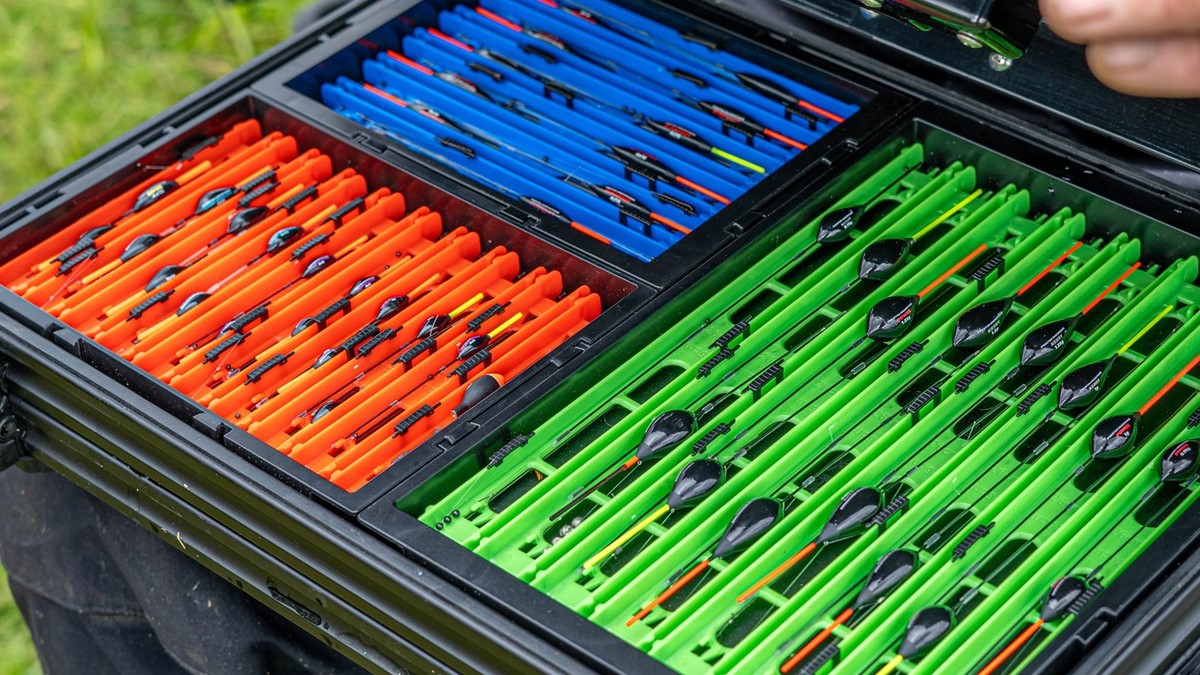

Walk the bank at any commercial fishery and you'll see rig boxes packed to bursting. Here's why the most consistent match anglers use just three — and why you should too.
There's a particular type of angler you see at every match. They arrive early, set up a vast army of rigs along the side tray, and spend the first twenty minutes deliberating which one to start on. By the time they've decided, the whistle has gone and the angler two pegs down — fishing a rig they've used a hundred times before — has already had their first bite.
Most experienced match anglers will quietly tell you the same thing: you don't need a hundred rigs. In fact, the more rigs you carry, the more decisions you introduce — and decisions cost time, focus, and confidence. The angler who has standardised on three core setups and knows them intimately will, over the course of a season, outscore the one with a box full of options they're never quite sure about.
This article is the first in a series on tackle standardisation — the philosophy of stripping back your setup to what genuinely works, understanding it completely, and fishing it with total conviction. It starts with rigs because rigs are where most anglers carry the most unnecessary complexity. And it starts with three because three is genuinely all you need.
Simplicity isn't a compromise. It's a competitive advantage. Three rigs, fished with absolute belief, will outscore a box full of options every single time.
Why Decision Fatigue is Costing You Fish
Match fishing demands constant decision-making from the first minute to the last. Where to feed, how much, when to switch lines, when to rest a swim, how to respond when bites slow — the cognitive load is enormous. Every unnecessary decision you add to that list is attention and energy taken away from the things that actually catch fish.
Rig choice is one of the most common sources of unnecessary anxiety on the bank. With a box full of options, the internal conversation becomes: is this the right float? Should I have used a heavier bulk? Would a different hook length get more bites? This second-guessing is corrosive. It undermines confidence, slows down your fishing, and distracts you from the rhythm that produces consistent results.
Psychologists call this decision fatigue — the deteriorating quality of decisions made after a long session of choosing. Surgeons, judges, and chess players all experience it. So do match anglers. The solution isn't to make better decisions under pressure; it's to eliminate the decisions that don't need to be made.
By standardising on three rigs, you reframe the question. Instead of 'which of my twenty rigs should I use?', you ask 'which of my three core rigs best fits today's conditions?' That's a question with a clear, quick answer. And once you've answered it, your full attention goes back to the water.
The angler whose head is clear catches more fish. Fewer decisions means more focus. More focus means better feeding, better presentation, and faster reactions to bites.
The Power of Familiarity
There's a second, equally important reason to standardise: familiarity. When you've fished the same three rigs dozens, then hundreds of times, you develop an instinctive feel for each of them that no amount of deliberate thought can replicate.
You know how your 4x14 slim float sits in a crosswind. You know the moment the strung-out rig has settled properly. You know the difference between a liner and a bite on the carp rig from the way the float dips. You know when something feels wrong — the bait is dragging, the depth is slightly out, the shotting is tangled — because your hands and eyes have seen that rig in every conceivable condition.
This familiarity creates something that's undervalued in angling conversations: genuine confidence. Not the confidence of believing you have the right rig for every scenario, but the deeper confidence of knowing your setup is correct because you've proven it, over and over, in every season and condition. That confidence changes how you fish — you commit more fully to your feeding, strike with conviction, and read the session more clearly.
Compare that to fishing an unfamiliar rig. Every twitch of the float is ambiguous. Every subtle dip prompts hesitation. You're never quite sure if you're reading it correctly. That uncertainty costs bites — and it costs concentration that should be elsewhere.
The Three Rigs: An Overview
These three rigs are not gimmicks or niche solutions. They are the workhorses of commercial match fishing — tried, tested, and refined across thousands of sessions. One is built for carp, one for F1s, and one for silverfish. Together, they cover the vast majority of situations you will encounter on any commercial fishery in any season.
|
|
Carp Rig |
F1 Rig |
Silverfish Rig |
|
Main line |
0.22mm |
0.20mm |
0.18mm |
|
Hooklength |
0.20mm |
0.18mm |
0.16mm |
|
Elastic |
Hollow 14–16 |
Hollow 12–14 |
Solid 6–8 |
|
Float |
0.4–0.6g body-up |
4x14 slim-bodied |
4x12 slim pencil |
|
Shotting |
Bulk + 2 droppers |
Strung bulk |
Shirt button |
|
Best for |
Summer carp, margins, aggression |
F1s, mixed venues, year-round |
Roach, skimmers, winter, hard days |
The variations within each rig — heavier floats in wind, finer hooklengths in clear cold water, stronger elastics for margin work — are adjustments to the template, not departures from it. The backbone stays the same. That consistency is the whole point.
Rig One: The Carp Rig
Carp are the engine of summer commercial fishing. They fight hard, feed aggressively, and put serious weight in the net quickly. But they also demand tackle with backbone — gear that can control a double-figure fish charging for reeds without giving an inch at the wrong moment.
The carp rig is your powerhouse. It's built for authority. When the fish are feeding and the bites are coming, you want a rig you can unhook, rebait, and cast back out in seconds, confident it's doing its job without any fussing required.
|
Main line |
0.22mm — withstands margin battles and repeated contact with pole bushes |
|
Hooklength |
0.20mm — slightly finer for natural presentation, still strong for big fish |
|
Elastic |
Hollow 14–16 — shock-absorbing, controllable, capable of bullying fish from snags |
|
Float |
0.4–0.6g body-up, strong side eye — sits steady in chop, registers proper bites |
|
Shotting |
Bulk 12–18 inches from hook, two small droppers below |
|
Hook |
Strong wire, size 14–16, forged bend — reliable hold on hard-mouthed fish |
The shotting pattern is worth understanding in detail. A bulk set 12 to 18 inches from the hook, with two smaller droppers below, serves two purposes: it holds the bait steady at depth when there's undertow or drift, and it allows a short, natural final fall of the hookbait that carp find attractive. It's not a delicate rig — it's not meant to be. It's a rig that works hard and reliably, session after session.
This rig is also remarkably versatile within its intended purpose. You can fish it at five metres in the margins where carp cruise on warm afternoons, at thirteen metres over a bed of pellets, or pushed down the edge tight to island rushes. The weight range of the float means it handles a light ripple as easily as a flat calm. Think of it as your hammer — built to drive results.
When to reach for the carp rig
• Summer and early autumn commercial matches where carp are active and competitive
• Margin fishing any time carp are showing near features
• Any session where bonus double-figure carp are a realistic prospect
• Short-range fishing at five to eight metres where presentation is secondary to control
Rig Two: The F1 Rig
The F1 rig is the one you'll reach for most often. F1s are present on virtually every commercial fishery in the country, and they're catchable year-round in a way that pure carp aren't. But they're also noticeably warier than carp — smaller mouths, more cautious feeding habits, and a sensitivity to anything that feels unnatural that makes them endlessly interesting to target.
This rig sits precisely between brute strength and fine finesse. It's robust enough to handle the odd big carp that muscles in uninvited, yet sensitive enough to register the delicate lift bites and tentative dips that F1s produce when they're cautious. Getting that balance right is the art of the F1 rig.
|
Main line |
0.20mm — strong enough for bonus carp, fine enough not to spook F1s |
|
Hooklength |
0.18mm — balanced, natural presentation without sacrificing strength |
|
Elastic |
Hollow 12–14 — forgiving on delicate takes, backbone for better fish |
|
Float |
4x14 slim-bodied, carbon or wire stem — stable, sensitive, versatile |
|
Shotting |
Strung bulk — small shots spread over 18 inches for a natural, gradual fall |
|
Hook |
Fine wire, size 16–18, barbless — light enough for expanders and maggots |
The strung bulk shotting pattern is what defines the F1 rig's character. By spreading a cluster of small shots across eighteen inches above the hook rather than grouping them tightly, you create a rig that falls through the water slowly and naturally — exactly how a piece of loose feed or a drifting maggot would behave. F1s intercept baits mid-water regularly, and the strung pattern gives them multiple opportunities to do so on every cast.
This rig is also a genuine chameleon. With a short line set above the float, you can fish it shallow at two to three feet for F1s that have come up in the water. By adjusting the bulk position slightly, you can fish it hard on the deck over a bed of micros. The 4x14 float works in a light tow and in a flat calm. Very few rigs offer this range of adaptability without any modification at all.
When to reach for the F1 rig
• Year-round F1 fishing — this is your most-used rig
• Mixed venues where F1s and carp share the same lines
• When bites become tentative and the carp rig is missing fish
• Winter sessions targeting cold-water F1s with maggot or soft expanders
• Any session where you want sensitivity without sacrificing too much strength
Rig Three: The Silverfish Rig
Silverfish are the unsung heroes of match fishing. Roach, skimmers, perch, and bream might not produce the explosive takes and hard runs of carp, but on hard winter days, patchy summer sessions, or any match where carp are uncooperative, the ability to build a steady silverfish weight can be the difference between framing and finishing mid-table.
The silverfish rig is built entirely around sensitivity. Every element is chosen to maximise your ability to detect the subtle, delicate bites that roach and skimmers produce — and to present a hookbait in the most natural, unobtrusive way possible.
|
Main line |
0.18mm — all you need; rarely under pressure from heavy fish |
|
Hooklength |
0.16mm — fine presentation, still adequate for pound-plus skimmers |
|
Elastic |
Solid 6–8 — cushions small roach strikes, handles surprise bonus fish |
|
Float |
4x12 slim pencil or wire stem — fine bristle reads tiny dips and lifts |
|
Shotting |
Shirt button — evenly spread from bulk to hook for the slowest natural fall |
|
Hook |
Fine wire, size 18–20 for maggot/caster; 16 for pellet or worm |
The shirt button shotting pattern is the silverfish rig's signature. By spacing individual shot evenly from the main bulk down to a single dropper near the hook, you create the slowest, most natural descent of any shotting pattern available. Roach in particular feed 'on the drop' — they intercept baits as they fall rather than waiting for them to settle on the bottom. A shirt button pattern gives every single cast multiple opportunities for a bite on the way down.
The fine bristle float tip is equally important. Silverfish bites are often a lift rather than a pull-under — the fish tips up to take a bait from the bottom, momentarily lifting the shot and causing the float to rise fractionally. A thick-tipped float misses this entirely. A fine bristle makes it unmissable.
This rig also has a quiet value that's easy to underestimate: it builds confidence on hard days. When the venue is fishing badly and carp are sulking, switching to the silverfish rig and starting to catch roach steadily is one of the best feelings in match fishing. You're no longer waiting and hoping — you're fishing positively and putting weight in the net.
When to reach for the silverfish rig
• Winter league matches on commercials where F1s and silvers dominate
• Any session where carp are patchy and silvers are feeding confidently
• Dedicated roach and skimmer fishing on natural or estate waters
• When you need to settle into a rhythm and rebuild confidence mid-match
• On pressured venues where scaled-down gear makes a genuine difference
Making Adjustments Without Abandoning the System
One of the most common objections to the three-rig approach is that fishing conditions vary too widely for any fixed setup to cover everything. A hard frost changes the game. A howling wind demands a different float. A venue full of double-figure carp needs stronger gear than a stockie-dominant water.
This objection misunderstands what standardisation means. It doesn't mean fishing an identical rig in every condition regardless of sense. It means having a consistent template that you adjust intelligently, rather than starting from scratch every time.
• For cold, clear winter conditions — drop hooklength diameter by one step (0.16mm becomes 0.14mm on the F1 rig, 0.14mm becomes 0.12mm on the silverfish rig). The template stays the same; the material changes slightly.
• For strong wind or surface drift — move to the next float size up within the same pattern. A 4x14 becomes a 4x16; a 0.4g becomes a 0.6g. The shotting pattern and rig construction remain identical.
• For big-fish venues — scale the carp rig up slightly. 0.24mm main line, 0.22mm hooklength, a size 14 hook. But the float choice, shotting pattern, and elastic stay the same.
• For very shallow venues — adjust depth and reduce shot load accordingly. The shirt button pattern on a lighter float still works; it just needs proportionally fewer and smaller shot.
The key discipline is making one adjustment at a time and understanding why you've made it. This is how you build genuine knowledge of your rigs over time — not by starting fresh at every session, but by learning how your templates respond to different conditions and refining them accordingly.
Building the Habit: Tying and Maintaining Your Three Rigs
The practical benefit of three rigs is that they're easy to maintain to a consistently high standard. Tying a lot of rigs well is hard; tying three rigs perfectly is entirely achievable.
Aim to have two or three winders of each rig prepared before every session, with hooks that were tied or checked recently, floats that are undamaged, and shot that is positioned correctly rather than having shifted along the line. The ten minutes spent doing this the evening before a match is ten minutes you'll save — and then some — on the bank.
• Carp rig — carry three winders. One short line (5–6m), one mid-range (10–11m), one long (13m). The rig construction is identical; only the line length changes.
• F1 rig — carry three winders at different depths. The ability to switch depth without retying is one of the great practical advantages of standardisation.
• Silverfish rig — carry two or three winders, one set slightly shallower for on-the-drop roach fishing and one for bottom presentation.
Replace hooks at the first sign of blunting. Check the loop-to-loop connection at the hooklength before every session. Make sure elastic is running freely through the PTFE bushes and that there are no frays or knots. These are small habits that pay enormous dividends over the course of a season.
The Bigger Picture: Standardisation as a Philosophy
This article is about rigs, but the principle extends far beyond them. Tackle standardisation — the deliberate reduction of variables across your entire setup — is one of the most powerful performance-improving changes a developing match angler can make.
The same philosophy applies to elastic grades (how many do you actually need?), hook patterns (do you really require fifteen different types?), float ranges (could three or four cover ninety percent of your fishing?), and bait preparation (could a simpler, more consistent approach outperform a complex, inconsistent one?). Future articles in this series will explore each of these areas in detail.
The underlying principle is always the same. Every variable you eliminate is a decision you no longer need to make. Every decision you don't make frees up mental space for the things that actually determine results: reading the water, feeding intelligently, presenting the bait correctly, and responding to what the fish are telling you.
The best anglers aren't the ones with the most kit. They're the ones who've reduced their kit to exactly what works — and know it well enough that it never lets them down.
Start Today: The Three-Rig Challenge
Here's a practical challenge. Before your next match, deliberately limit yourself to three rigs — one carp, one F1, one silverfish. Set them up carefully, check them thoroughly, and resolve not to reach for anything else during the session regardless of what happens.
You might find it uncomfortable at first. The instinct to add a fourth rig, just in case, is strong. Resist it. Fish the three you have with full commitment and attention.
After the match, honestly assess how often you needed something your three rigs couldn't provide. The answer, for the vast majority of commercial fishery scenarios, will be almost never. And you'll have fished with a clarity and focus that a cluttered rig box rarely allows.
Three rigs. Tied well. Known completely. Fished with belief. That's the system — and it works.