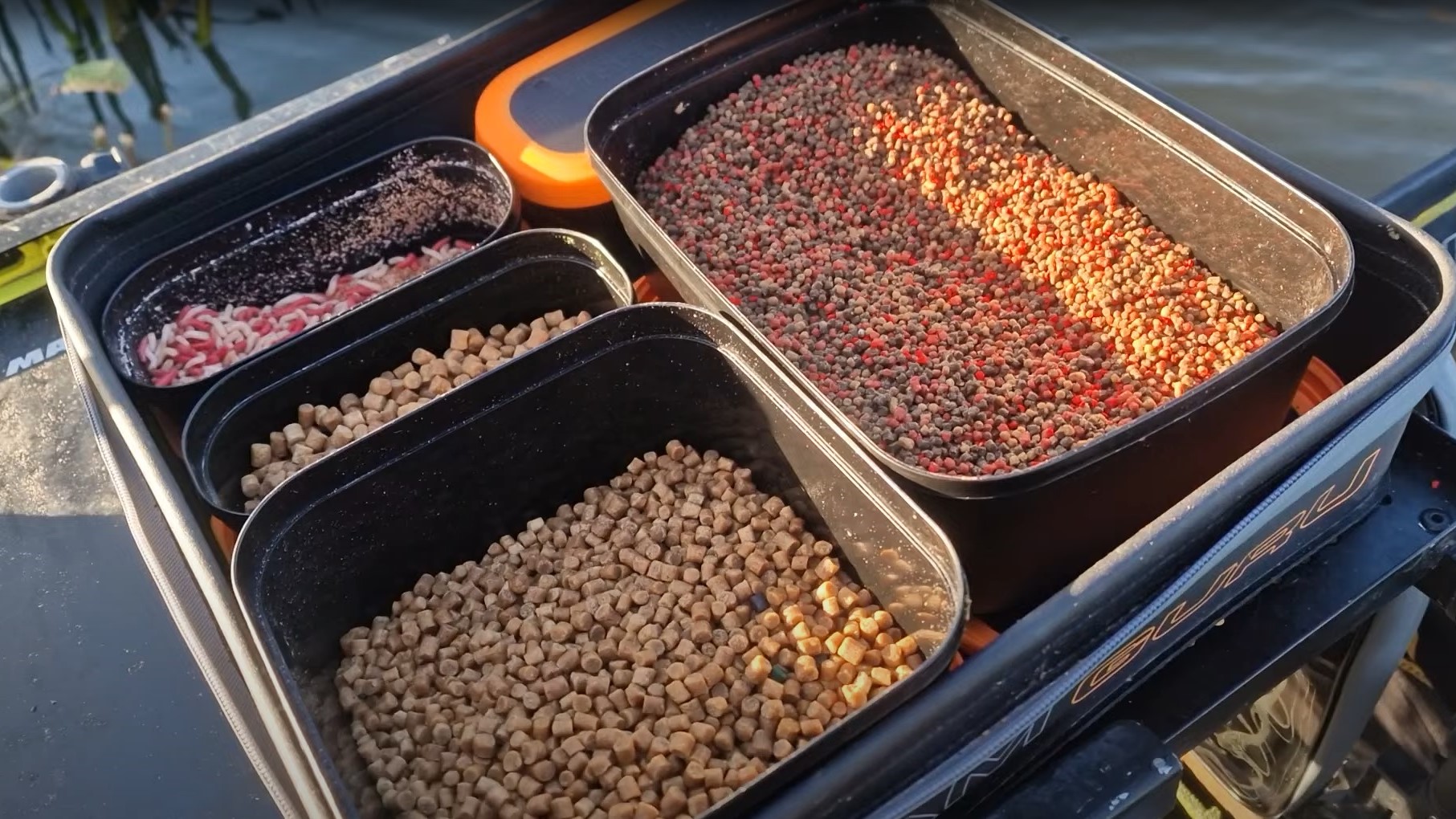

Pellets are the currency of commercial fishing. Every angler uses them, but not everyone understands how their preparation and use can make or break a session. Two anglers can sit side by side, feeding the same fishery pellets, and yet one will bag up while the other struggles for bites. The difference often isn’t luck — it’s pellet knowledge.
Behind those little brown nuggets lies a mix of chemistry, timing, and consistency. Knowing how pellets behave, how they absorb water, and how to tailor them for carp, F1s, or silverfish can transform your catch rate. Let’s dive into the science and strategy that turn ordinary pellets into match-winning bait.
Feed Pellets: Building the Foundation
Feed pellets are the workhorses of commercial fishing. They form the base of almost every match angler’s feeding strategy, whether you’re cupping them in on the pole line, catapulting them on the pellet waggler, or loading them into a method feeder.
Hard feed pellets come in sizes from 2mm to 8mm, each with its own purpose:
-
2–4mm: Keep fish competing and active, ideal for F1s and small carp.
-
6mm: Great for short lines and steady feeding.
-
8mm: Pick out better carp and ideal for method feeders or bomb fishing.
Dry pellets sink quickly, hitting the bottom hard. That’s fine if you’re targeting carp on the deck, but not ideal if you want to hold fish mid-water. To slow their descent and release attractants, most anglers soften them slightly.
The trick is in the soak. Too short, and pellets stay hard, bouncing off fish or rolling out of your swim. Too long, and they turn mushy, breaking down into paste-like mush that clouds the water and kills presentation.
The perfect prep method? Short soak, long rest.
-
Place your pellets in a bait tub.
-
Cover with water for 30 seconds (2mm pellets) to 90 seconds (6mm pellets).
-
Drain immediately.
-
Cover with a damp towel and leave them for 10–15 minutes.
As they rest, the surface moisture continues to soak in, leaving them soft on the outside but firm inside. That texture holds them together for cupping or feeding, yet allows them to break down gradually on the bottom — exactly what you want.
Expanders: Hookbait Magic
Expanders are a match angler’s secret weapon. Designed to soften fully when soaked and pumped, they become neutral-buoyant hookbaits that fish can suck in easily. Their beauty lies in their texture — soft enough for delicate F1s and wary carp, but resilient enough to stay on the hook.
The science is simple: expanders contain air pockets that make them float. To turn them into sinking hookbaits, you use a pellet pump. By pumping the air out and replacing it with water, you create a pellet that sinks naturally and feels just right to the fish.
How to prepare expanders:
-
Place dry expanders in a pellet pump.
-
Fill with water, seal, and pump several times until the pellets drop to the bottom.
-
Leave to soak for around 20 minutes.
-
Drain and store them in a bait box covered with damp towel or water to keep them fresh.
You can adjust soak time to control softness. For F1s and silvers, a lightly soaked expander with some spring left in it is perfect. For big summer carp, go slightly softer to encourage confident feeding.
Top tip: add a splash of flavour or liquid additive to the soak water. Not only does it enhance scent, but it also slightly alters buoyancy and texture — a fine-tuning detail that can make all the difference on pressured venues.
Hook Pellets: Strength and Speed
Pre-prepared hook pellets are tougher alternatives, ideal when small fish are pecking or when you’re speed-fishing in summer. They’re firm, consistent, and easy to band, hair-rig, or hook directly.
While they lack some of the subtle texture of expanders, they make up for it with convenience and reliability. In hot weather, when expanders can dry or split, a pre-prepared hook pellet keeps its shape all day.
I like to carry both. Tough hook pellets are unbeatable for bagging sessions when fish are climbing the pole legs and you’re catching fast. But when the fishing turns finicky — winter F1s or cold-water carp — expanders’ softness and natural feel come into their own.
The rule of thumb:
-
Hook pellets: for aggression and speed.
-
Expanders: for subtlety and precision.
Feeding Strategy: Matching Pellet to Purpose
Pellet size, frequency, and feeding style shape how fish behave in your swim. Small feed pellets create competition. Each mouthful is tiny, so fish have to stay active to get enough. Large pellets slow things down, drawing in fewer but bigger fish.
A few guidelines:
-
Summer feeding: Be positive. Feed small pellets regularly or handfuls of larger ones. Fish are aggressive, and you can afford to create noise and volume.
-
Winter feeding: Less is more. Feed pinches or single grains to avoid overfilling fish. Accuracy matters more than quantity.
Depth matters too.
-
Shallow fishing (2–3ft): Use small, slightly dampened pellets that sink slowly, encouraging fish to intercept on the drop.
-
On the deck: Use firmer, heavier pellets that carry feed to the bottom quickly.
-
Margins: Larger pellets or groundbait mixes keep big carp rooting confidently.
Always watch your response. If bites fade, fish may have drifted off or are feeding higher in the water. A quick switch to loose feeding or shallower presentation can reignite the swim.
The Chemistry of Pellets
Pellets are compressed oil-rich fishmeal and binders — and how they react to water is pure chemistry. They soften as they absorb moisture, but temperature, soak time, and pellet brand all influence how fast and how far that process goes.
-
Warm water: speeds up absorption and breakdown. Pellets soften quickly and release oils faster.
-
Cold water: slows everything down. Pellets stay firmer, and oils thicken, releasing scent more slowly.
That’s why in winter you might find pellets stubbornly hard even after soaking. Adjust by using warmer water for prep, or extending your soak slightly.
Each brand behaves differently too. Some use higher fishmeal content, others include binders like wheat or starch. It’s worth experimenting at home with soak times until you know how your chosen pellets behave.
Even air pressure and humidity can tweak the outcome — on dry summer days pellets absorb differently than in damp winter air. Serious match anglers note these details in their diaries (see what we did there?), building consistency over time.
Mixing Pellets and Groundbait
Some anglers blend softened micro pellets with groundbait for added texture and weight. This combination is particularly effective for method or hybrid feeder fishing. The groundbait adds cloud and scent; the micros hold fish longer in the swim.
Aim for a mix that squeezes easily into the feeder but breaks down within a minute or two underwater. A 50/50 ratio of soaked micros and groundbait is a good starting point, adjusted for conditions.
For pole work, this mix also works brilliantly when balled into the margin or cupped in as a slow-release carpet.
The Payoff: Timing, Texture, and Trust
Pellet preparation might seem trivial, but it’s one of the hidden arts of match fishing. It’s about rhythm — the soak, the rest, the feed, the bite. Done right, every pellet you throw or cup in behaves predictably, feeding confidence back to you.
When you get it wrong, you feel it immediately: pellets too mushy clogging the swim, expanders splitting on the hook, fish swirling but not settling. When you get it right, everything clicks — feed rhythm, bite timing, presentation.
As with most angling, success comes down to consistency. Get your pellet prep nailed, and it stops being something you worry about. It becomes second nature — one less thing between you and the next fish.
Final Thoughts
Pellets are the most universal bait in commercial fishing, yet the most misunderstood. Every bag of fishmeal in your carryall hides a lesson in water absorption, density, and timing.
Treat pellets not as “just bait” but as a living, changing ingredient that demands care and observation. Learn their behaviour, match their prep to season and target species, and you’ll soon find that your weights climb steadily while others are scratching their heads.
The science may sound complex, but the principles are simple: prepare carefully, feed intelligently, and trust your process. Do that, and those little brown nuggets will pay dividends in the only currency that matters — fish in the net.