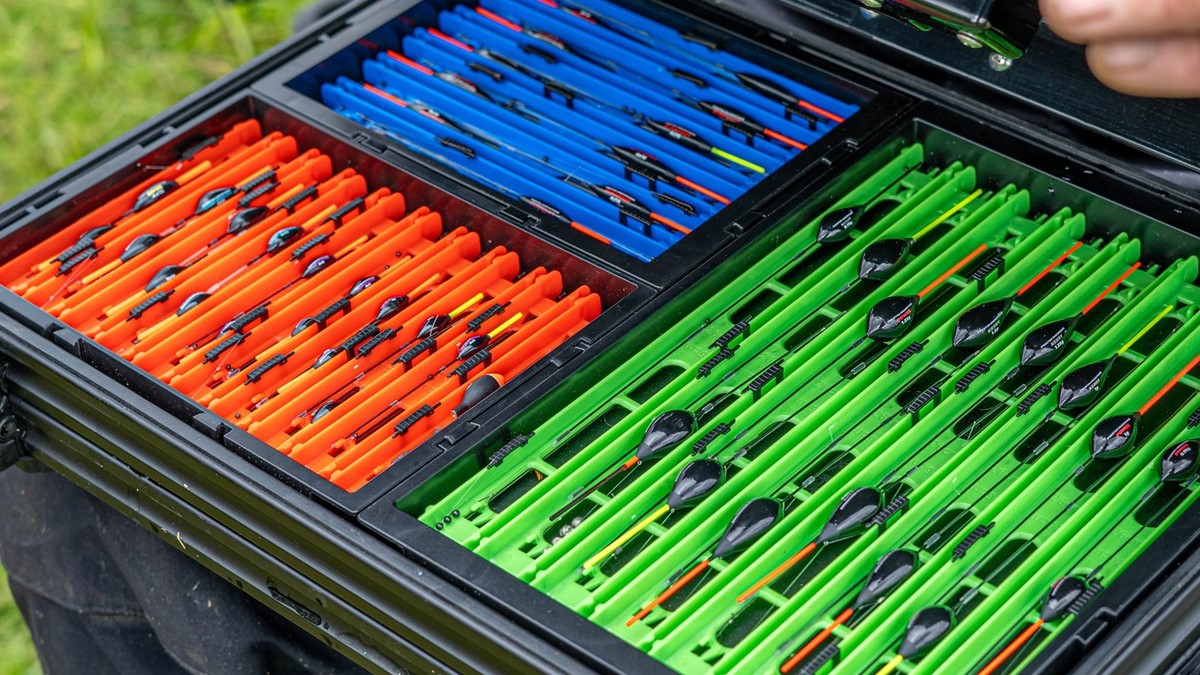

Walk along the bank at any commercial fishery and you’ll see anglers with rig boxes packed to bursting — dozens of winders, floats for every occasion, hooklengths tied in half a dozen variations. It looks impressive, but ask most seasoned match anglers and they’ll tell you a simple truth: you don’t need a hundred rigs to catch fish. In fact, a handful of well-chosen, well-tied rigs cover the vast majority of situations.
Standardising on three core rigs keeps your fishing consistent, efficient, and confident. These rigs are not gimmicks or niche tricks. They’re the workhorses: one built for carp, one for F1s, and one for silverfish. Master these, and you can walk onto almost any peg knowing you’ve got the right tools ready.
Why Standardisation Matters
Rig choice is one of the most common sources of anxiety on match day. With so many variables — depth, species, wind, feeding patterns — it’s easy to overcomplicate. Too many anglers waste precious time chopping and changing, or second-guessing themselves.
By standardising, you eliminate that decision fatigue. Instead of wondering “which of my 20 rigs should I use?”, you ask “which of my three core rigs best fits the conditions?” That small shift frees up your brain to focus on the real keys to match success: feeding rhythm, presentation, and timing.
Standardisation also means you build familiarity. You know exactly how a 4×14 slim float behaves in a crosswind, how a bulk-plus-droppers settles with pellets, how a strung-out rig presents maggots on the drop. When you’ve fished the same setups countless times, you react instinctively to bites, know when something looks wrong, and have absolute faith in your tackle.
Confidence catches fish — and confidence comes from consistency.
The Carp Rig
Carp are the bread-and-butter of summer commercial matches. They fight hard, feed aggressively, and put serious weight in your net. But they also demand robust gear. The carp rig is your powerhouse.
-
Main line: 0.22mm is a solid starting point. It’s thick enough to withstand margin battles but still manageable through pole bushes.
-
Hook length: Stepping down slightly to 0.20mm keeps the presentation natural while maintaining strength.
-
Elastic: Hollow 14–16 grade elastic provides shock absorption and control, cushioning hook holds while still letting you bully fish from snags.
-
Float: A 0.4–0.6g body-up float with a strong side eye. Sturdy enough to sit steady in chop, but sensitive enough to register proper bites.
-
Shotting: A bulk of shot set 12–18 inches from the hook, with two smaller droppers below. This holds bait steady but allows a natural final fall.
This rig is versatile. You can fish it short at 5m for cruising carp, long at 13m over feed, or down the margins tight to reeds. It has the backbone to land double-figure carp, yet is refined enough for smaller stockies.
Think of it as your “hammer” rig — if the carp are feeding, this does the job without fuss.
The F1 Rig
F1s are the bread-and-butter of many modern venues. They’re trickier than carp — smaller mouths, warier feeding habits, and delicate bites. The F1 rig sits between brute strength and finesse.
-
Main line: Drop to 0.20mm. Still strong enough for the odd carp that muscles in.
-
Hook length: 0.18mm keeps things balanced and offers that little extra finesse.
-
Elastic: Hollow 12–14 is perfect: forgiving enough for small F1s, yet with backbone for bonus fish.
-
Float: A 4×14 slim-bodied float with a carbon or wire stem. Stable but not heavy, letting you fish delicate baits like expanders or maggots.
-
Shotting: Strung bulk — a cluster of small shots spread over 18 inches above the hook. This gives a natural fall that matches how F1s intercept baits mid-water.
This rig is a chameleon. You can fish it shallow with a short line above the float, or on the deck when F1s settle over micros. It’s the one to reach for when conditions demand subtlety and you need to keep bites ticking over steadily.
The Silverfish Rig
Silvers are often overlooked, but on hard days or in winter they can make the difference between framing and blanking. Roach, skimmers, and perch demand finesse and sensitivity — and that’s what the silverfish rig provides.
-
Main line: 0.18mm is plenty; you rarely need more.
-
Hook length: 0.16mm gives delicate presentation without sacrificing too much strength.
-
Elastic: Solid 6–8 is ideal. It’s soft enough to avoid bumping small fish but firm enough for a surprise pound-plus skimmer.
-
Float: A 4×12 slim pencil or wire-stemmed float. The slim body and fine bristle registers tiny dips and lifts from shy-biting roach.
-
Shotting: Spread out evenly down the line (a “shirt button” pattern). This creates a slow, natural fall, perfect for catching roach “on the drop.”
With this rig, you’re playing the percentages. On tough winter matches where carp sulk, building 10–20lb of silvers can often win sections. It’s also a confidence builder — you know you can always put fish in the net.
Why Just Three?
Because these three rigs cover 90% of match scenarios. Everything else is a variation — a heavier float for wind, a finer hook length for icy water, a bigger elastic for summer lumps. But the backbone doesn’t change.
By focusing on these three, you avoid clutter and second-guessing. You also keep your prep time shorter: tying fewer rigs, stocking fewer hooklengths, and spending more time practising feeding and presentation.
In essence: fewer rigs, fished better.
The Payoff
Consistency, speed, and confidence are the real gains. On match day, you’re not rummaging through a mountain of rigs. You’re unclipping one of your three essentials, plumbing up, and fishing.
That extra time adds up. Minutes saved at the start mean more fish in the net. More importantly, your head stays clear. You trust your setups, focus on feeding, and react quicker to conditions.
Angling isn’t about owning the most kit. It’s about making the most of the time you have. Three rigs, fished with belief, will outcatch a tangle of options every time.
Final Thoughts
There will always be a place for specialist rigs — a shallow slapper for mugging carp in summer, a heavy float for deep reservoirs, a finesse rig for bloodworm and joker. But those are extras, not essentials.
If you stripped your box back to just three rigs — a carp rig, an F1 rig, and a silverfish rig — you’d still be equipped for 90% of matches. More importantly, you’d fish with clarity, not confusion.
Fishing is as much mental as physical. Simplifying rigs simplifies decisions. Simplified decisions lead to confidence. And confidence puts fish in the net.
So instead of chasing every rig under the sun, focus on these three. Tie them well, know them inside out, and you’ll never be under-prepared.