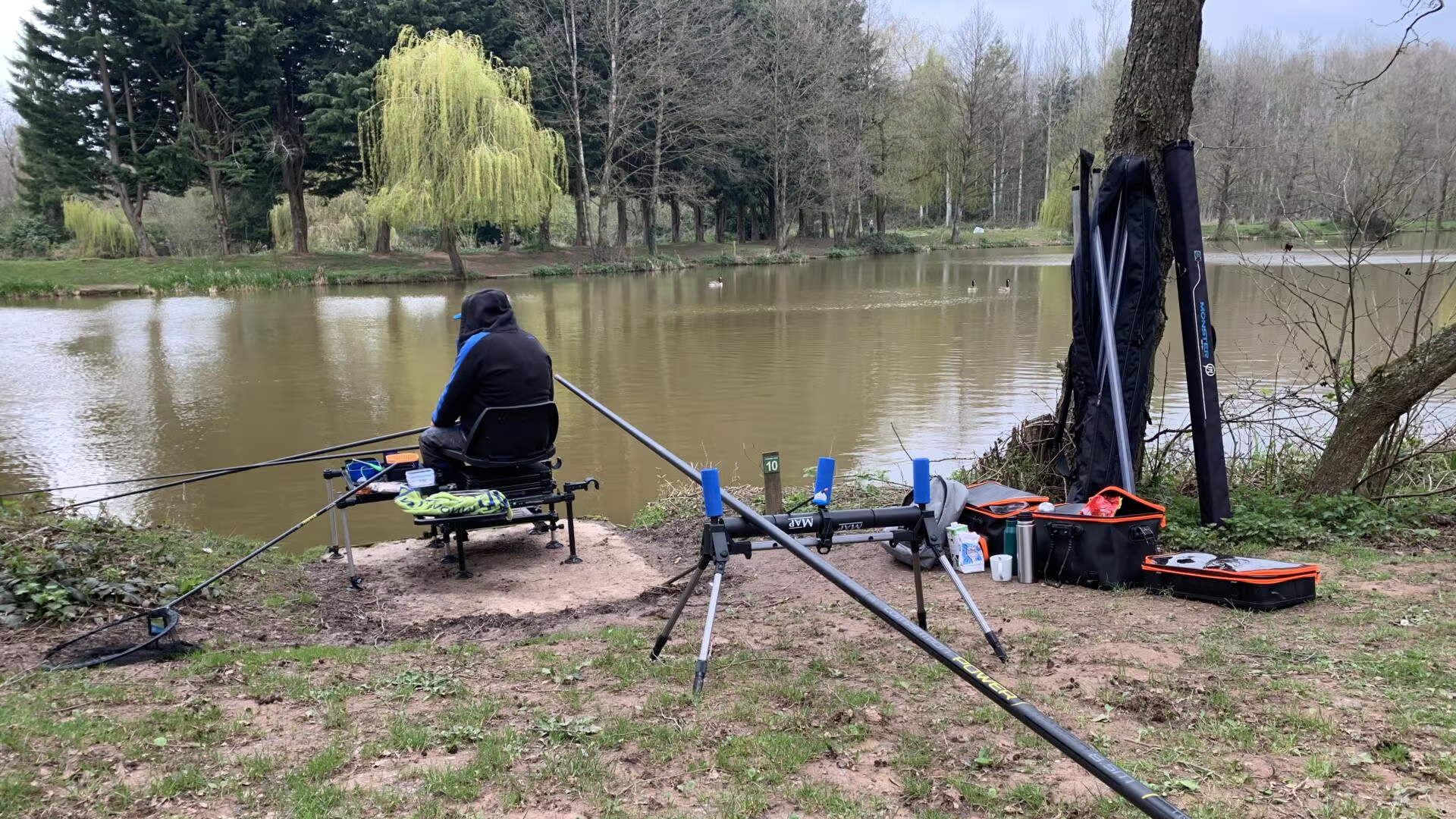

When winter grips a commercial fishery, the most reliable target species is the F1. They’re hardy enough to feed in cold water, but they do so delicately. That means light gear, patience, and total confidence in your setup. Winter F1 fishing is a test of finesse rather than brute strength.
Reading Winter Conditions
Cold water changes everything. F1s often shoal tightly, moving very little during the day. You might find them sat at 6 metres one day and 14 metres the next, but they’ll rarely roam freely. Finding them is as important as feeding them. Plumbing carefully and experimenting with lines is key.
Clarity increases in cold water too, so heavy rigs and strong elastics spook fish quickly. Even a tiny mismatch in presentation can cost bites. Scaling down is non-negotiable if you want consistent results.
Line and Hooklengths
Winter means dropping diameters. My go-to setup is 0.18mm main line with 0.16mm hooklengths, or even stepping down to 0.14mm if conditions are really tough. That keeps presentation fine but strong enough to land an odd bonus carp.
Hook patterns should be fine-wire to avoid masking baits like maggots or pinkies. Barbless remains standard on commercials, but the key is sharpness and lightness.
Elastic Choices
Elastic can make or break winter fishing. F1s pull hard but with softer mouths in cold water, so I rely on hollow 10–12. It cushions the strike on delicate bites, gives protection to fine hooklengths, and still has enough power to land fish quickly without drawn-out fights.
For smaller venues or silver-dominant waters, I’ll drop to solid 8–10. It’s softer, more direct, and perfect when bites are few but every fish counts.
Feeding Strategy
Forget the heavy summer dumps of pellets. Winter F1s want little but often. A few maggots or micros via a toss pot is often all you need to trigger bites. Too much feed and the shoal shuts down completely.
I tend to start negatively, feeding almost nothing and watching for signs. Once I’ve got a response, I trickle tiny amounts in rhythm with the bites. It’s about keeping the shoal settled rather than filling them up.
Rigs and Floats
A delicate approach needs a stable rig. Slim-bodied floats around 4×14 are my standard, with strung bulk or spread shotting patterns for natural presentation. A fine tip is critical — you’ll often be striking at tiny dinks.
Fishing slightly overdepth, so the bait rests gently on the bottom, can help steady the rig and convert more bites.
The Payoff
Winter F1 fishing might not be as frantic as a summer bagging session, but it has its rewards. Working hard for every bite sharpens your skills, builds patience, and makes summer fishing feel easy by comparison. When others blank, you can still put together a tidy net.