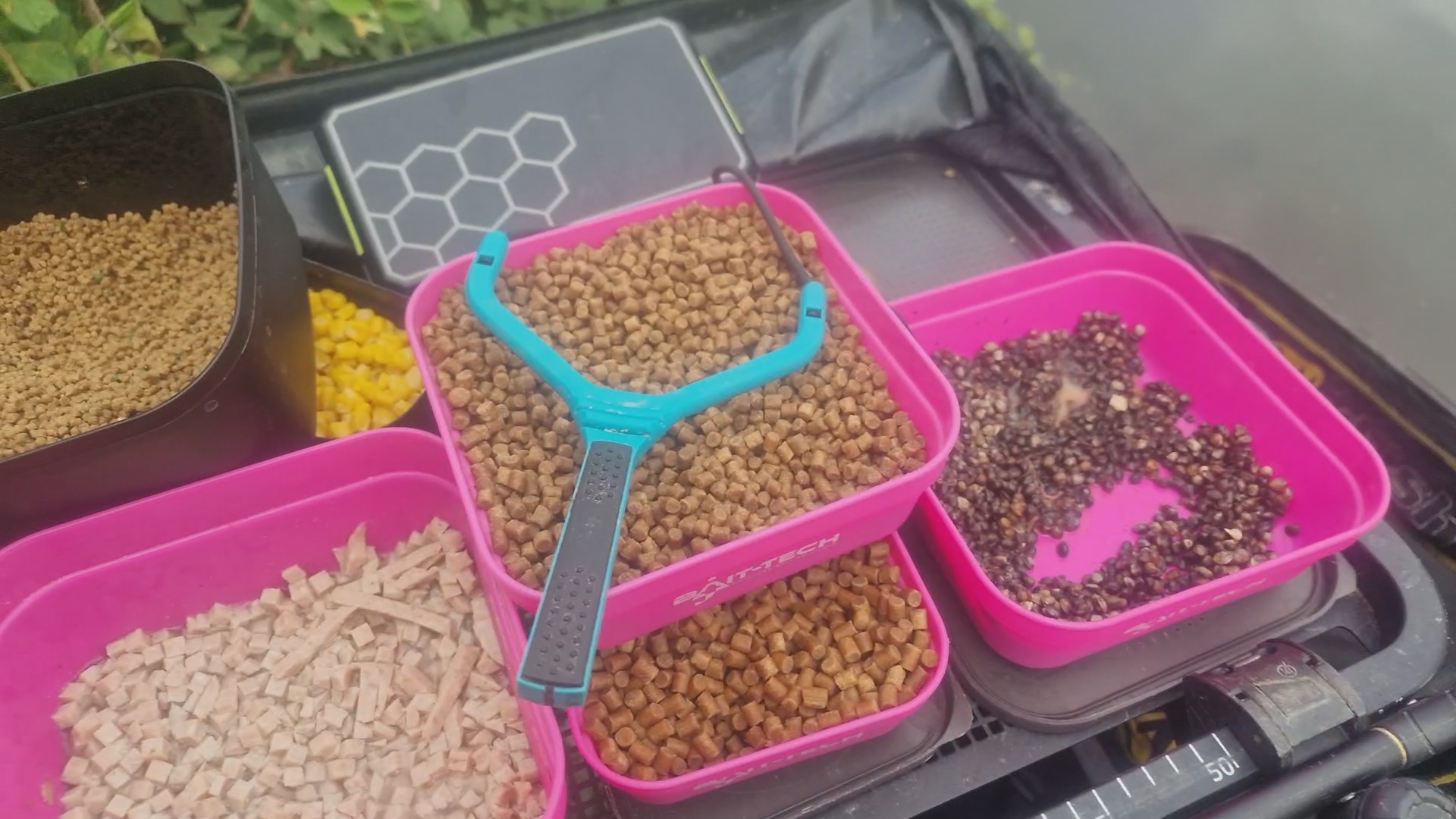

When to Stop Feeding a Swim
At some point during almost every match, I find myself looking at a swim and wondering what to do with it. I’ve been feeding it. Perhaps I’ve caught a few fish from it, perhaps it hasn’t really got going, or perhaps it was good earlier and has gradually faded away. So the questions start. Do I stay here another ten minutes? Has the catch rate genuinely fallen, or have I just had a slightly slower spell? Do I feed again? Do I feed less? Have the fish gone, or have I changed something by feeding too much? And eventually comes the bigger question: When do I stop feeding it?
It sounds as though there ought to be a straightforward answer. Give a swim a reasonable amount of time, and if it isn’t producing, stop wasting bait on it and concentrate somewhere else. But the more I think about it, the less convinced I am that stop feeding is actually the right question. Because a swim doesn’t necessarily change from good to useless in a single moment. Fish move, feeding behaviour changes and a line that isn’t producing now may still have a role to play later in the match. Perhaps instead of deciding whether to keep feeding a swim or abandon it completely, there’s another option.
We can downgrade it.
Feeding Isn’t Simply On or Off
Before the match starts, I have a plan. I’ve decided where I’m going to fish, what I’m going to feed and broadly how I’m going to approach each line. As we discussed in How Many Lines Do You Really Need in a Match?, each line should have a reason for existing rather than simply being there because it’s somewhere anglers traditionally fish. The same should really apply to the bait going into it.
If a line has a purpose, the feed going into that line should have a purpose too. Perhaps I’m feeding to attract fish into an area. Once they’re there, I may be feeding to hold them. I might be trying to create competition, or deliberately feeding pellets in a way that encourages fish to come shallow. A margin may be receiving bait because I’m trying to develop it for later rather than because I expect to catch from it immediately. Those are very different objectives.
So why would they all require the same response when fish aren’t immediately going in the net? This is where I think we can get trapped by thinking about feeding as an on/off decision. The line is active, so we feed it. The line isn’t working, so we stop. Real fishing isn’t usually that tidy. Imagine I’ve started long and I’m catching steadily. I’ve also got a short line that I’m developing and a margin that I expect to become more important later.
At the all-in, those three lines exist as part of my plan. Two hours later, however, I know far more about my peg than I did when the match began. The long line has produced fish. The short line hasn’t really developed. The margin hasn’t produced anything either. On paper, two of my three lines haven’t worked. But that doesn’t necessarily mean the same thing for both of them.
I may have expected the short line to develop by now, so the lack of fish there is useful information. The margin, however, may be doing exactly what I expected because I never intended to fish it this early anyway. The absence of fish is the same.
What that absence means is completely different.
The Swim That Never Really Starts
The difficult one is often the swim we’ve expected to produce but which stubbornly refuses to do so. We’ve fed it from the beginning. We’ve given it time. We’ve perhaps tried it once or twice and nothing much has happened. So we feed it again. Another half-hour passes. We try it again. Still nothing.
At this point a strange bit of angler psychology begins creeping in. I’ve already put bait there. I’ve spent part of the match developing it. If I stop now, all that effort feels wasted. And perhaps the next feed will be the one that finally gets it going. So another little pot of bait goes in.
There is, of course, every possibility that the swim eventually will come good. Fish move around commercial fisheries throughout a match and somewhere that appears almost lifeless for two hours can suddenly contain fish later. That’s precisely why I’m reluctant to simply abandon it.
But there is an important difference between not abandoning a line and continuing to invest in it at exactly the same rate.
If I’ve been feeding a short line regularly for two hours and received very little evidence that fish are responding, why should the next two hours automatically receive the same amount of bait? The match has given me new information. I should probably do something with it. So rather than crossing the line off completely, I can downgrade it.
Perhaps I feed it less often. Perhaps I reduce the amount I’m putting in. Maybe I stop disturbing it with a rig every twenty minutes and simply keep a small amount of bait going in occasionally.
I’m not saying the line is dead. I’m saying that, based on the evidence I currently have, it deserves less of my investment. That leaves the possibility of something rather useful happening later. If fish begin showing there, the water colours up, I start seeing movement, or I have some other reason to believe the line has changed, I can upgrade it again. Nothing about the original decision has to be permanent.
What About a Swim That Was Working?
This is where things become even more interesting, because a slowing swim isn’t necessarily an empty swim. I’ve been catching steadily and then the gaps between bites begin getting longer. Immediately the questions start. Was that just a slow ten minutes? Are there fewer fish there? Do I need to feed again? Have I fed too much already? Perhaps I’m still getting indications but not proper bites. Maybe I’m getting liners. I might start foul-hooking fish. Perhaps the stamp of fish has changed.
Those things matter because simply putting more bait in isn’t automatically the answer to a declining catch rate. If the fish have started coming off the bottom, feeding more could encourage that behaviour further. If I’ve got too many fish competing around the feed and I’m struggling to present a hookbait properly, another pot of bait might make the situation worse rather than better. Equally, the swim may simply need another feed to pull fish back together.
The difficult part is that from the seatbox I don’t get a little message saying which of those things has happened. I have to interpret what I’m seeing. That’s competitive fishing. The question isn’t simply “Are there still fish there?” It’s “What is the swim telling me, and is what I’m doing still helping me catch them?” Sometimes the answer might be to feed again. Sometimes it might be to feed less. Sometimes it may be worth changing the way I’m feeding rather than the amount. And occasionally the best thing I can do is leave the swim alone for a while and let the fish settle over the bait that’s already there.
The important thing is that I’m making the next feeding decision because of what is happening now, rather than because the plan I made before the match said I should feed every five minutes.
Silence Doesn’t Necessarily Mean Failure
This is particularly important with swims that are being developed for later. A margin is the obvious example. Suppose I’ve found a good margin while plumbing up. I’ve chosen it because I’ve got a sensible depth and a flat area where I can present a bait accurately, and I’ve decided that its job is to give me the possibility of better carp later in the match.
For the first couple of hours I catch elsewhere. Nothing happens down the margin. Has it failed? I don’t know, because I haven’t actually asked it to do anything yet.
If the purpose of that line is to become useful later, judging it by whether I could catch there during the first hour makes little sense. This is why the purpose of a line matters so much.
A swim that I expected to produce immediately but hasn’t given me a bite for two hours is giving me one kind of information. A swim I’m deliberately developing for the final part of the match is giving me something entirely different.
Silence is information, but we still have to interpret what the silence means.
And sometimes our biggest mistake is becoming impatient with it. We’ve fed the margin, so we want to know whether there are fish there. We have a quick look. Nothing. We go back to the productive line. Twenty minutes later curiosity returns and we have another quick look. Still nothing.
By repeatedly checking whether the margin is ready, we may actually be preventing fish from settling there confidently. In that situation, the answer isn’t necessarily more feed or less feed. It may simply be leaving the line alone long enough to do the job we created it for.
Feed According to the Evidence You Have Now
The more I think about feeding during a match, the less useful I find the idea of treating every line equally. They may have started equally in my mind before the all-in, but they won’t remain that way for long. One line begins producing regularly. Another gives me occasional fish. A third has shown very little sign of life. Why would I continue allocating bait and attention to all three as though nothing has changed? The match is continuously giving me information, and as that information changes, so should my level of investment. The productive line may deserve most of my attention because I know there are feeding fish there. The occasional line may remain useful without needing the same amount of bait. The poor line can be downgraded without being abandoned. And if the evidence changes, the priorities can change again.
A line that was poor for the first half of the match might suddenly start showing signs of life. Perhaps I try it and catch immediately. Now the evidence is different. Upgrade it.
Likewise, the line that has carried me through the first three hours may begin deteriorating badly. I don’t owe it another two hours simply because it has already caught me most of my weight. Downgrade it if the evidence says I should.
This isn’t about constantly changing things for the sake of it. In fact, quite the opposite. If I’m catching well and the swim is behaving exactly as I want it to, I want to be very careful about interfering unnecessarily. But I also don’t want to continue doing something merely because it worked an hour ago.The decision I’m making now should be based on the information I have now.
Patience and Stubbornness Aren’t the Same Thing
This is probably one of the hardest distinctions to make during a match. Sometimes a swim needs patience. Perhaps I know from experience that fish usually arrive later. Maybe conditions suggest the margin will become stronger as the bank settles down. Perhaps I’ve deliberately fed an area lightly, and I’m prepared to wait for it to develop. That’s patience with a reason behind it.
Stubbornness is different. Stubbornness is continuing to feed and fish somewhere because I’ve already invested so much in it that giving up feels wrong. “I’ve fed it for three hours. It has to come good eventually.” No, it doesn’t.
Fish haven’t entered into an agreement with us that says a particular quantity of pellets eventually guarantees a bite. The bait I’ve already fed has gone. The time I’ve already spent has gone. The only useful question is what I think is likely to happen next.
And even then, the answer doesn’t necessarily have to be abandonment. If I still think there’s a reasonable possibility of the line becoming useful, I can keep it alive with a much smaller investment. That’s the beauty of downgrading. I haven’t closed the door. I’ve simply stopped standing in the doorway waiting for something to happen.
So When Should You Stop Feeding a Swim?
Perhaps now we can return to the question in the title. When should I stop feeding a swim? There will certainly be occasions when the answer genuinely is now. A line may have shown so little promise, conditions may have changed so completely, or another part of the peg may be so obviously superior that putting any more bait there serves no useful purpose. But I don’t think stopping should be our automatic response whenever a swim isn’t producing. Nor should continuing exactly as before.
Most of the time there is a considerable amount of room between those two choices. We can reduce the amount. We can reduce the frequency. We can leave the swim alone for longer. We can keep a small amount of bait going in while concentrating our fishing somewhere more productive. And if something changes, we can increase the investment again.
The important thing is to stop thinking of feeding as something that’s either switched on or switched off. Every time we introduce bait, we’re trying to achieve something. If the evidence suggests that it’s achieving what we want, carry on. If the evidence begins to weaken, perhaps the investment should weaken with it. And if the evidence improves, we can respond to that too. So perhaps the question I should be asking on the seatbox isn’t: “When do I stop feeding this swim?” It’s: “Based on what I know right now, how much bait does this swim deserve?”
That answer can change throughout the match. And that’s exactly the point. Don’t simply feed or stop feeding. Learn when to upgrade and when to downgrade.