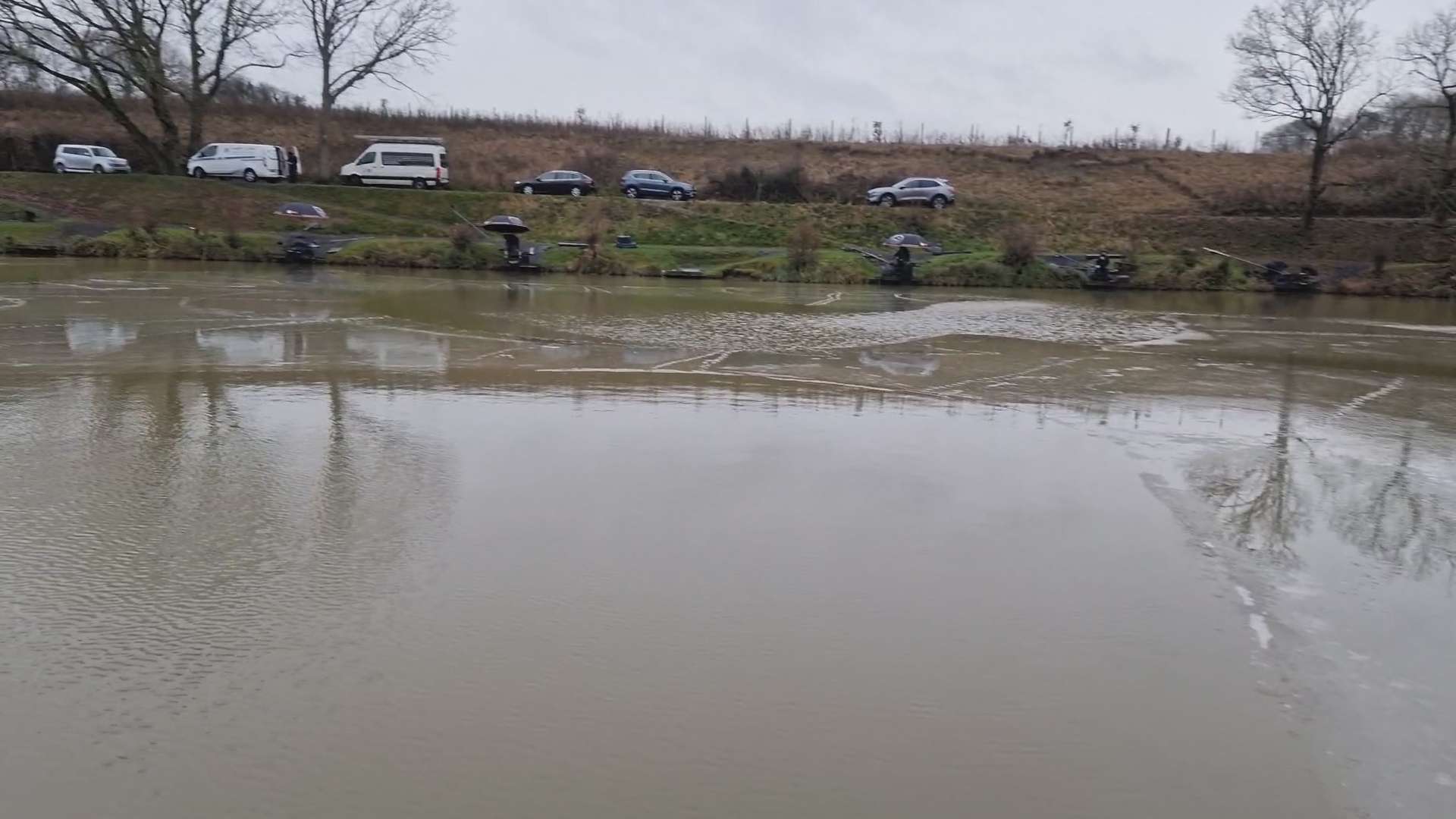

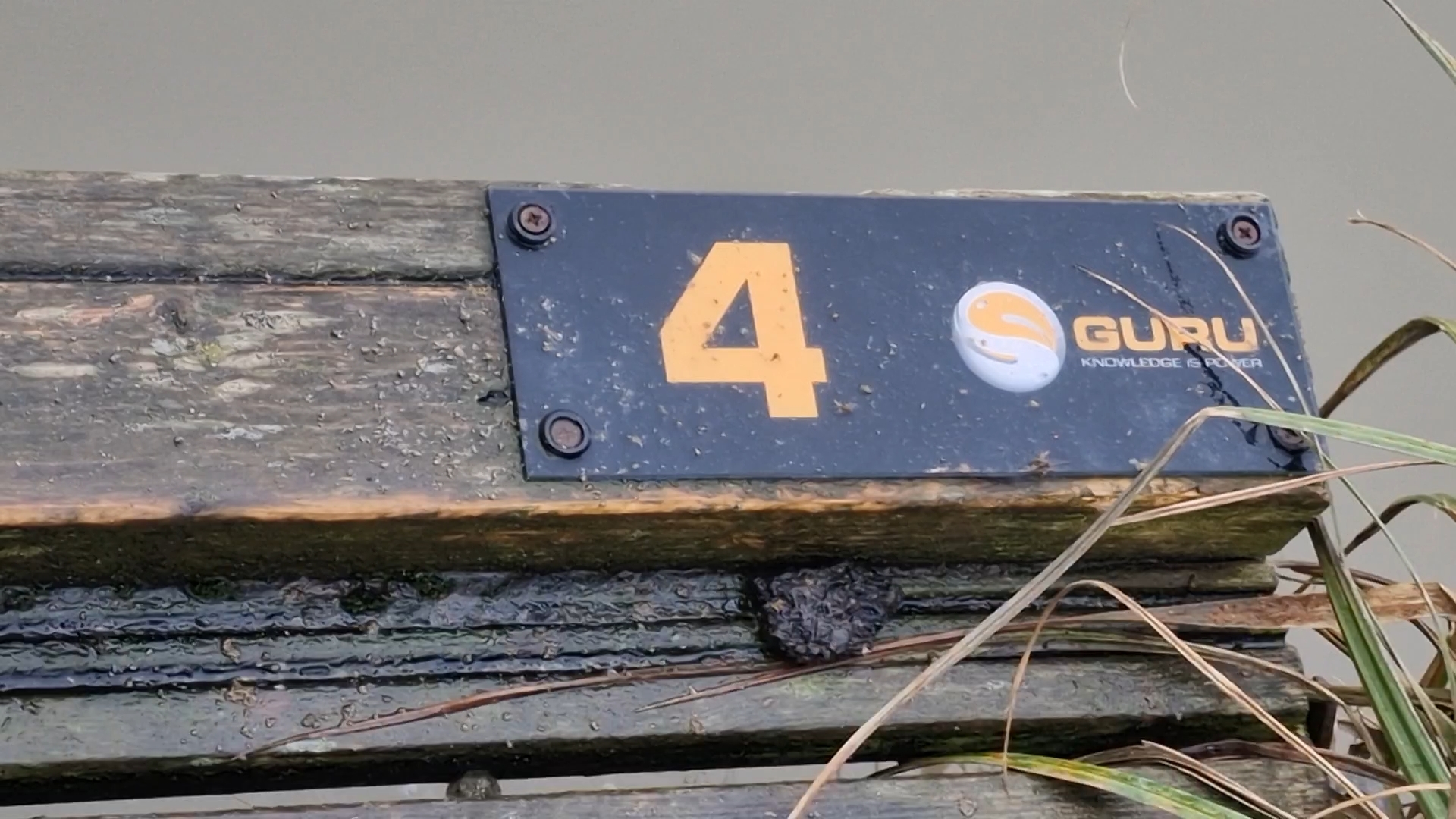
Today, I was at Aston Park, for a round in the Guru Super Sunday Winter League, I drew Split Lake, Peg 4, which is normally good for a few fish. The weather was cold; it started to rain at the 'all-in' and persisted all day. On top of that I had a sheet of ice to my right to contend with; it kept drifting, and I didn't manage to move it until very late in the proceedings.
There were 39 anglers fishing Split and Stable, 19 on Split Lake.
First Impressions
Paid £20 for pools this week — reduced from £25, reason unclear. Turnout was noticeably down, which told its own story before a rig even went in. Split and Stable in winter can be brutal when the lake goes quiet, and today had that “snooker table” feel written all over it.
Peg 4 on Split is usually fair. No obvious features, uniform depth across all four pegs, and only a small patch of ice to the right-hand side. The rest of the swim was clear — not encouraging, not discouraging. Just… blank.
Initial Plan
With no features to work with, the plan was simple and logical:
Right-hand side
-
12m and 6m
-
Maggots as the primary search bait
Left-hand side
-
12m and 6m
-
Micros with expanders as an alternative offering
Rigs used were solid, trusted tools rather than experiments:
-
4x14 F1 Maggot
-
4x12 F1 Maggot
-
4x14 F1 Pellet
-
4x12 F1 Pellet
Everything about the setup was deliberate. Nothing flashy. Nothing reckless.
The Reality
The session never really started.
No liners. No bumps. No signs of fish moving through the peg. Rotating lines, distances, and baits felt methodical rather than hopeful — which is exactly how winter fishing should feel — but the confirmation never came.
Each grid of water was covered properly. Each area got time. Each change was measured. And still, nothing gave itself away.
This wasn’t a case of doing one thing wrong. It was a case of nothing being right because nothing was there.
Observations Worth Keeping
-
Uniform-depth pegs with no features offer very little feedback in winter
-
Clear water does not equal active fish
-
Ice nearby doesn’t always push fish into the open—sometimes it just means they’ve shut down entirely
-
Reduced attendance and lowered pools were early warning signs, not coincidences
The important thing: the approach was sound. The thinking was sound. The execution was calm and disciplined.
Sometimes the only lesson is learning to recognise when a venue is simply switched off.
Closing Thought
This felt like a waste of diesel and bait — emotionally, that’s fair. Practically, it wasn’t.
Blank days refine judgement. They reinforce patience. They teach restraint. They also remind you that winter leagues aren’t about heroics—they’re about survival, observation, and staying mentally straight when the lake says “no”.
Field Notes aren’t about celebrating success. They’re about recording truth.
And today’s truth was simple:
There were no fish to catch.
That, inconveniently, is still useful knowledge.
What I’d Try Differently Next Time
1. I’d commit harder to one primary search line early
I covered water properly, but in hindsight fishing four lines (6m and 12m on both sides) may have spread the signal too thin on a lake that was clearly shut down.
Next time, I’d pick one long line first—most likely 11–13 metres—and treat the opening 30–40 minutes as a straight yes-or-no test:
Is there anything alive here?
If the answer is no, I haven’t lost time — I’ve proved absence, and that’s powerful information. Winter fish don’t reward polite variety; they reward stubborn clarity.
2. I’d reduce bait earlier than feels comfortable
Even modest feeding can be “too loud” on days like this.
My thinking would be:
-
Single maggot or dead maggot
-
Feed only via the hook for longer
-
No micros until I’ve had proof of life
This isn’t about starvation tactics. It’s about avoiding spooking fish I never even get to see. In ultra-quiet conditions, the first mistake is often feeding before I’ve confirmed there are fish there to feed.
3. I’d introduce a drag-and-hold element
On featureless bowls, static fishing can just sit and wait politely for fish that aren’t moving.
I’d make a small adjustment:
-
Fish slightly over-depth
-
Hold the rig still for 10–15 seconds
-
Then drag it 6–12 inches and stop
Not enough to fish on the drop, but enough to create a micro disturbance. Sometimes that tiny movement is the only thing that says “food” rather than “plastic”.
4. I’d deliberately keep a “nothing line”
This sounds odd, but it’s a discipline thing.
I’d allocate one line — probably the shorter 6m line — as a zero-feed line:
-
No loose feed
-
No initial baiting
-
Just a bare hookbait dropped in occasionally
If that line produces anything at all—even a liner—it tells me fish are drifting rather than feeding. That single piece of information can change the entire approach.
5. I’d mentally reframe the aim earlier
This is the big one.
By around 90 minutes in, I’d stop thinking in terms of building a swim and switch fully to:
-
Nicking bites
-
Stealing ounces
-
Surviving, not winning
Winter leagues are often won by anglers who recognise early that today isn’t that day — and then fish accordingly. One fish can be a result. Two can be a section saver.
The uncomfortable truth
Nothing here guarantees bites — and that’s the point.
What these tweaks do is sharpen decision-making speed, which is what really separates winter results. I didn’t lack rigs, skill, or logic. What the day demanded was ruthless simplification and earlier acceptance of the lake’s mood.
That’s not failure.
That’s learning how to fish properly when the water says “no”.